
Daily market brief ·
Nasdaq surged 6.68% despite hotter inflation. Why?
The Nasdaq rallied 6.68% because steady 4.94% bond yields showed a December Fed rate hike was already priced in.
Hotter inflation and stronger growth
On paper, the economic data released before Thanksgiving gave stock traders plenty of reasons to worry. October core PCE inflation, the preferred price gauge of the Fed, America's central bank, ticked up to 3.3% from 3.1% in September. Headline PCE inflation also rose to 3.8%, slightly beating Wall Street estimates.
At the same time, the Bureau of Economic Analysis revised third-quarter US economic growth up by 90 basis points to an annualized rate of 4.3%. Stronger business investment and rising government spending powered that upward revision.
When prices heat up alongside brisk economic growth, the central bank has little reason to pause. Those two reports cemented market bets on a 25-basis-point rate hike at the Fed's December 8-9 policy meeting.
Stocks staged a historic holiday rally
Normally, locked-in rate hikes knock growth stocks down because higher borrowing costs make future profits worth less today. Yet Wall Street did the exact opposite. In a shortened Black Friday session that closed at one p.m. Eastern, buyers stepped in across the board.
The Nasdaq Composite jumped 2.31% on Friday to finish the week up 6.68%. The S&P 500 climbed 1.60% on the day to lock in a 5.60% weekly gain. For both indexes, it marked the strongest Thanksgiving week since 2008.
The advance was not just a narrow bounce in a few giant tech stocks. Four in five stocks rose across major US exchanges, and all eleven S&P 500 sectors ended higher. Even after that surge, both the S&P 500 and the Nasdaq remain on track for steep monthly losses in November.
Bond yields had already done the work
So why did stock traders shrug off a December rate hike? The answer was sitting in the bond market. The 10-year US Treasury yield, the benchmark borrowing rate that guides mortgages and corporate loans, closed the week at 4.94%, completely unchanged from the prior week.
That flat finish told traders an important story. November's earlier selloff in stocks and bonds had already pushed yields high enough to reflect the coming December tightening. Meanwhile, the US Dollar Index hovered near a twenty-two-month high around 103.81, showing that tight financial conditions were already baked into markets.
Because yields refused to break higher after the inflation and growth reports, stock buyers did not have to fight a fresh jump in borrowing costs. With margin-related cash-raising pressure easing, liquidity stabilized across markets and risk appetite returned.
Dip buyers returned to chips and real-economy winners
With bond yields steady, traders rotated back into beaten-down semiconductor and artificial intelligence stocks. The Philadelphia Semiconductor Index jumped 4.69% on Friday, led by sharp rebounds in SanDisk and Micron Technology. Newly public AI lab Anthropic also climbed 11% to reclaim its $83 IPO price, easing nerves about how AI infrastructure gets financed.
Not every chipmaker joined the party, though. Nvidia lagged with a 0.80% gain after S&P Global Ratings placed its credit rating on negative watch, and reports noted paused AI server shipments to four Southeast Asian nations ahead of next week's congressional testimony on China export controls.
Crucially, the tech bounce had backing from the real economy. Adobe data showed US online spending reached $82.5 billion between November 1 and November 22, up 9.1% year over year. Those early holiday figures helped lift Amazon shares by 3.96%, while Caterpillar gained 10% for the week on a record $78 billion backlog tied to AI data-center power demand.
For casual traders watching what comes next, the message from this week is clear. Even with the Fed's December 8-9 meeting ahead, steady bond yields and resilient consumer and industrial spending gave beaten-down tech stocks room to bounce, though company-specific risks still separate the winners from the laggards.
More from the blog
-

Daily market brief ·
U.S. stocks on Black Friday: Can the comeback hold?
U.S. stocks face a short session after the Dow erased a 1,100-point drop. Can $12.9 billion in online sales outweigh tariff risks?
-
Daily market brief ·
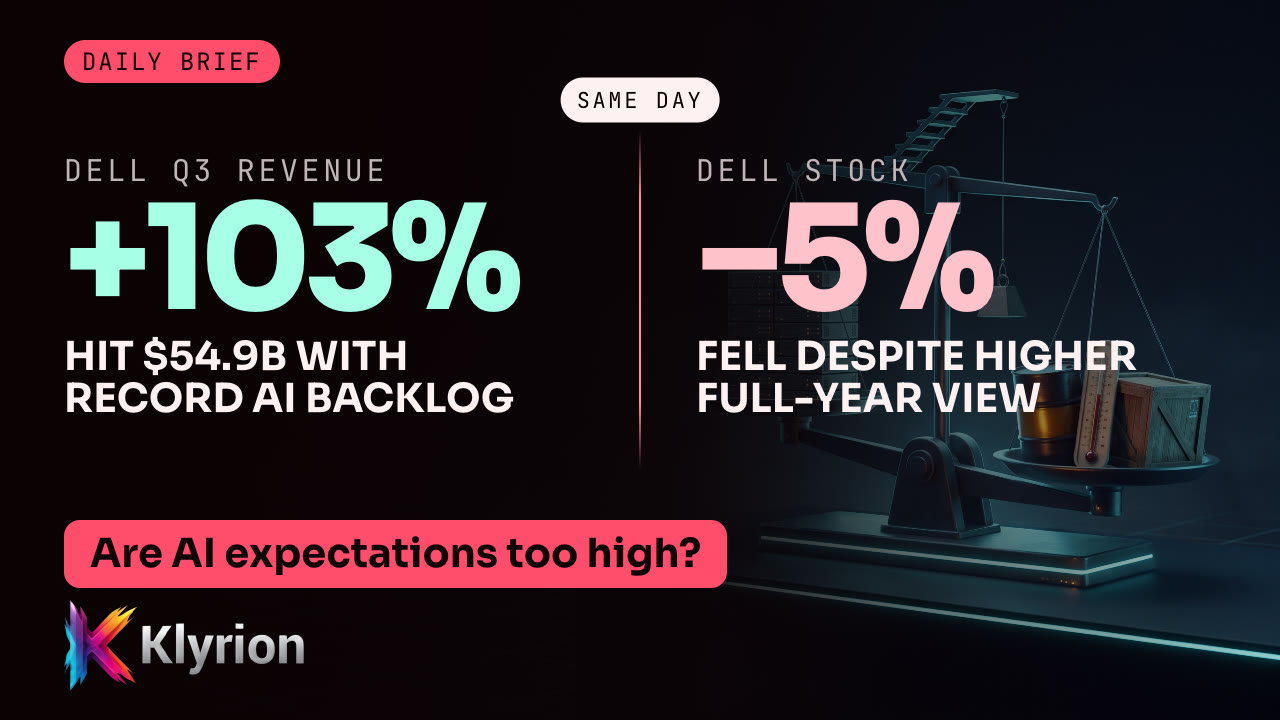
Dell's revenue doubled. Why did the stock drop?
Blowout artificial intelligence sales are no longer enough to satisfy Wall Street. Here is why fears over chip shortages, corporate debt, and interest rates are pushing traders out of big tech.
-
Daily market brief ·
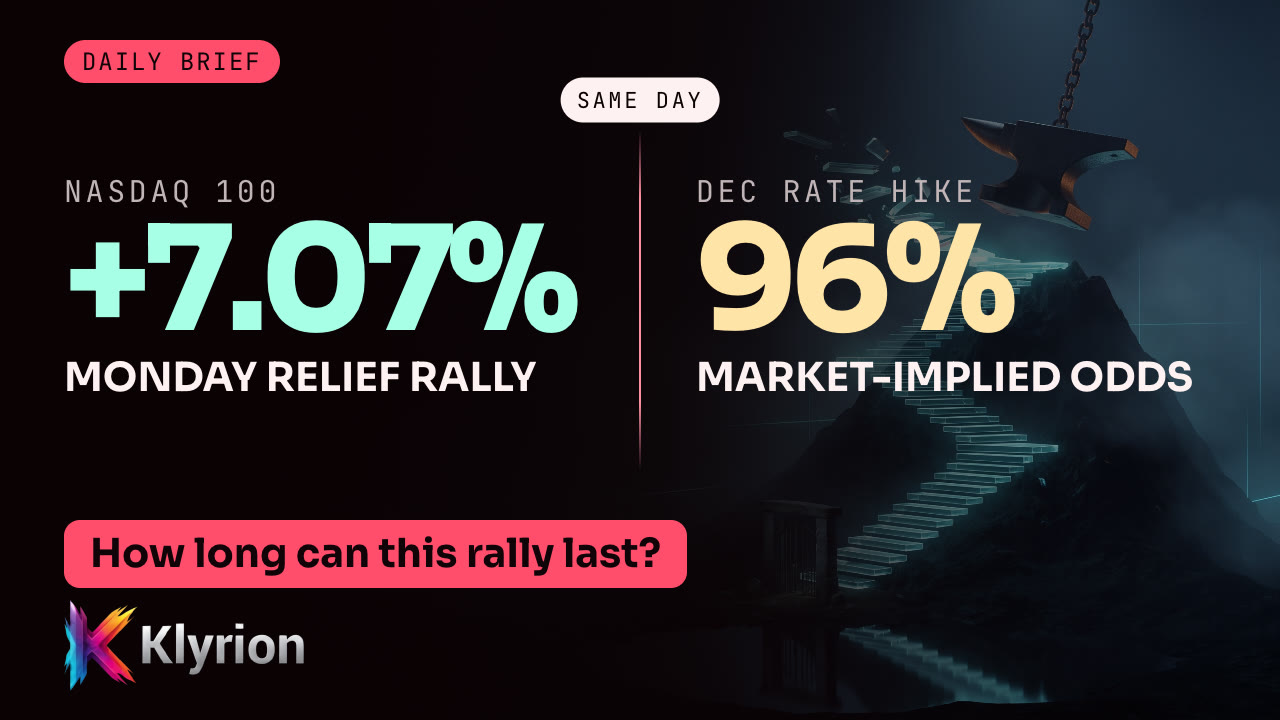
A 7% Tech Rally, 96% Rate-Hike Odds. What Gives?
Nvidia's surprise leadership U-turn ignited a massive tech rebound on Monday. Yet stubborn inflation fears keep a December interest rate hike firmly on the table.