
Daily market brief ·
U.S. stocks on Black Friday: Can the comeback hold?
U.S. stocks face a short session after the Dow erased a 1,100-point drop. Can $12.9 billion in online sales outweigh tariff risks?
A shortened Black Friday test
U.S. stock markets reopen today after closing Thursday for Thanksgiving. The New York Stock Exchange and the Nasdaq will run on a shortened Black Friday schedule, closing three hours early at one p.m. Eastern. Bond markets will close an hour later at two p.m. Eastern.
The big question for traders is simple: can stocks hold onto Wednesday's dramatic late-day comeback? Overnight index futures pointed higher ahead of the open, helped by a rebound in Europe and Asia while U.S. desks were away.
Yet the backdrop remains tense. Traders are returning to a market still digesting hot inflation data, shaky artificial intelligence shares, and fresh tariff proposals from Washington.
Why buyers stepped in
Wednesday looked bleak at the start as the Fear and Greed Index fell to 9 out of 100, signaling extreme fear. Meanwhile, the Cboe Volatility Index (VIX)—a measure of expected stock swings—touched 35 before easing to 28.1.
Then afternoon dip-buying flipped the script. The Dow Jones Industrial Average erased an early 1,100-point drop to close up 0.33%. The S&P 500 and Nasdaq 100 still finished slightly in the red, though both clawed back steep morning losses.
Instead of chasing expensive technology shares, traders rotated into cyclical stocks, which tend to rise and fall with the broader economy, and smaller companies. The Russell 2000, an index that tracks small-cap stocks, led the market with a 0.71% gain.
Falling bond yields also gave stock valuations a little breathing room. The yield on the ten-year U.S. Treasury note fell to 4.85%, marking an eighth straight day of declines as nervous investors sought safety in government debt.
Shoppers back the comeback
That shift into economically sensitive stocks leans on a key pillar: the American consumer still appears willing to spend. Adobe Analytics projects a record $12.9 billion in Black Friday online sales today, up 9.2% from last year.
For the full November-December holiday period, Adobe expects online spending to reach $275.1 billion. The National Retail Federation forecasts total holiday retail sales will top $1.013 trillion, even with mixed consumer sentiment.
Broader economic numbers released earlier this week back up that resilience. Third-quarter U.S. economic growth was revised up to an annualized rate of 4.3%, while weekly initial jobless claims fell to 189,000, matching the lowest level of the year.
Thin volume and tariff risks
Still, a shortened holiday session comes with a clear catch: thin liquidity. With many institutional traders away for the long weekend, fewer buyers and sellers are in the market, which means even modest orders can amplify price swings.
Traders are also weighing fresh trade uncertainty. While U.S. markets were closed, investors had to digest new Section 301 tariff proposals from the Office of the U.S. Trade Representative across fourteen trading partners, with rates ranging from 15% for allies to 40% for China. European stocks rallied 1.8% on relief over the lower cap for allies, while Beijing warned it reserves the right to take countermeasures.
At the same time, hot inflation has locked in expectations for a 25-basis-point interest rate hike from the Federal Reserve, America's central bank, on December ninth. October core PCE—the Fed's preferred inflation gauge that strips out food and energy prices—rose 3.3% from a year earlier. The real test of Wednesday's comeback will come next week, when full trading volume returns ahead of that Fed decision.
More from the blog
-
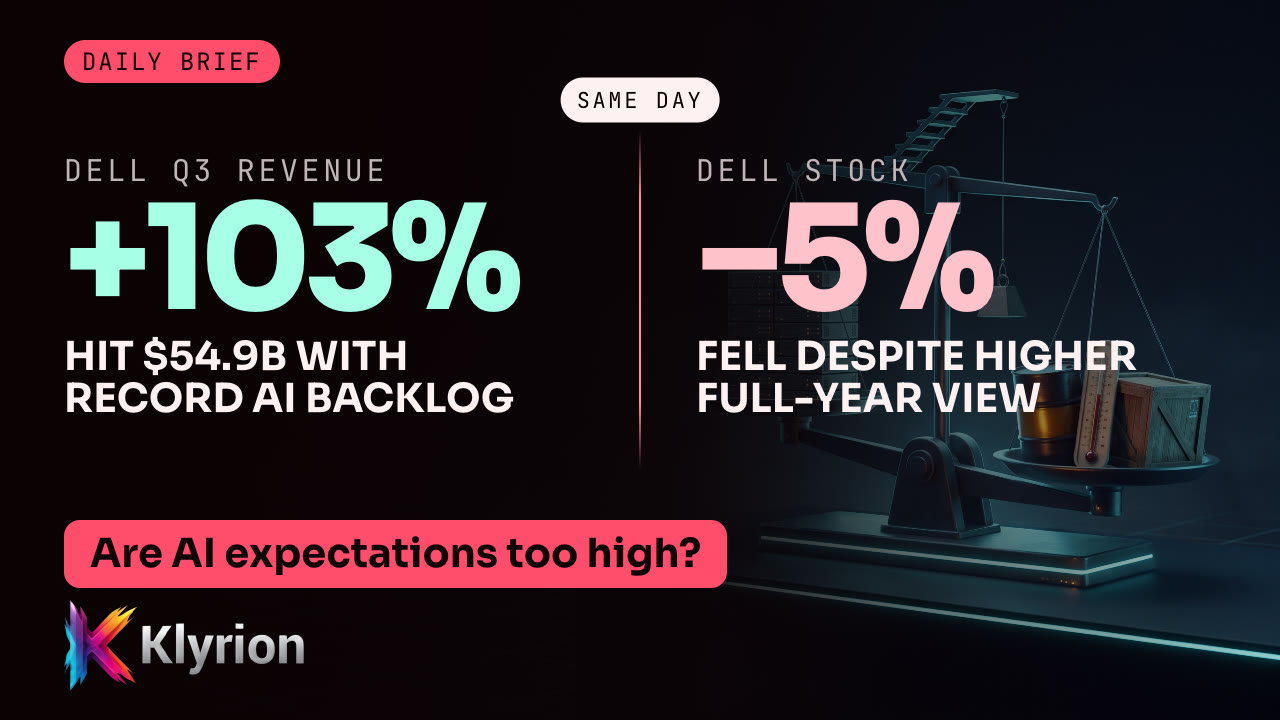
Daily market brief ·
Dell's revenue doubled. Why did the stock drop?
Blowout artificial intelligence sales are no longer enough to satisfy Wall Street. Here is why fears over chip shortages, corporate debt, and interest rates are pushing traders out of big tech.
-
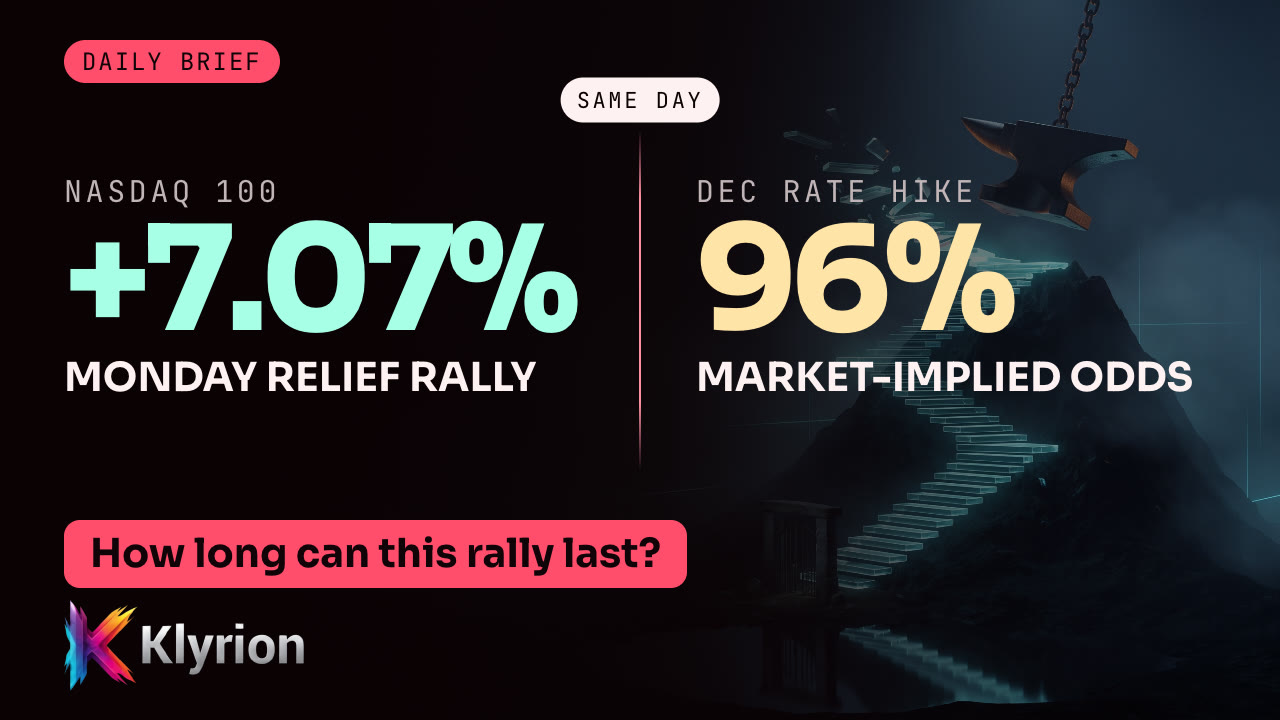
Daily market brief ·
A 7% Tech Rally, 96% Rate-Hike Odds. What Gives?
Nvidia's surprise leadership U-turn ignited a massive tech rebound on Monday. Yet stubborn inflation fears keep a December interest rate hike firmly on the table.
-
Daily market brief ·
Can a $1.5T IPO Save the AI Trade?
Big money just backed the largest stock debut in history, even as high interest rates punish other artificial intelligence names. Here is why Wall Street is suddenly splitting the sector in two.